
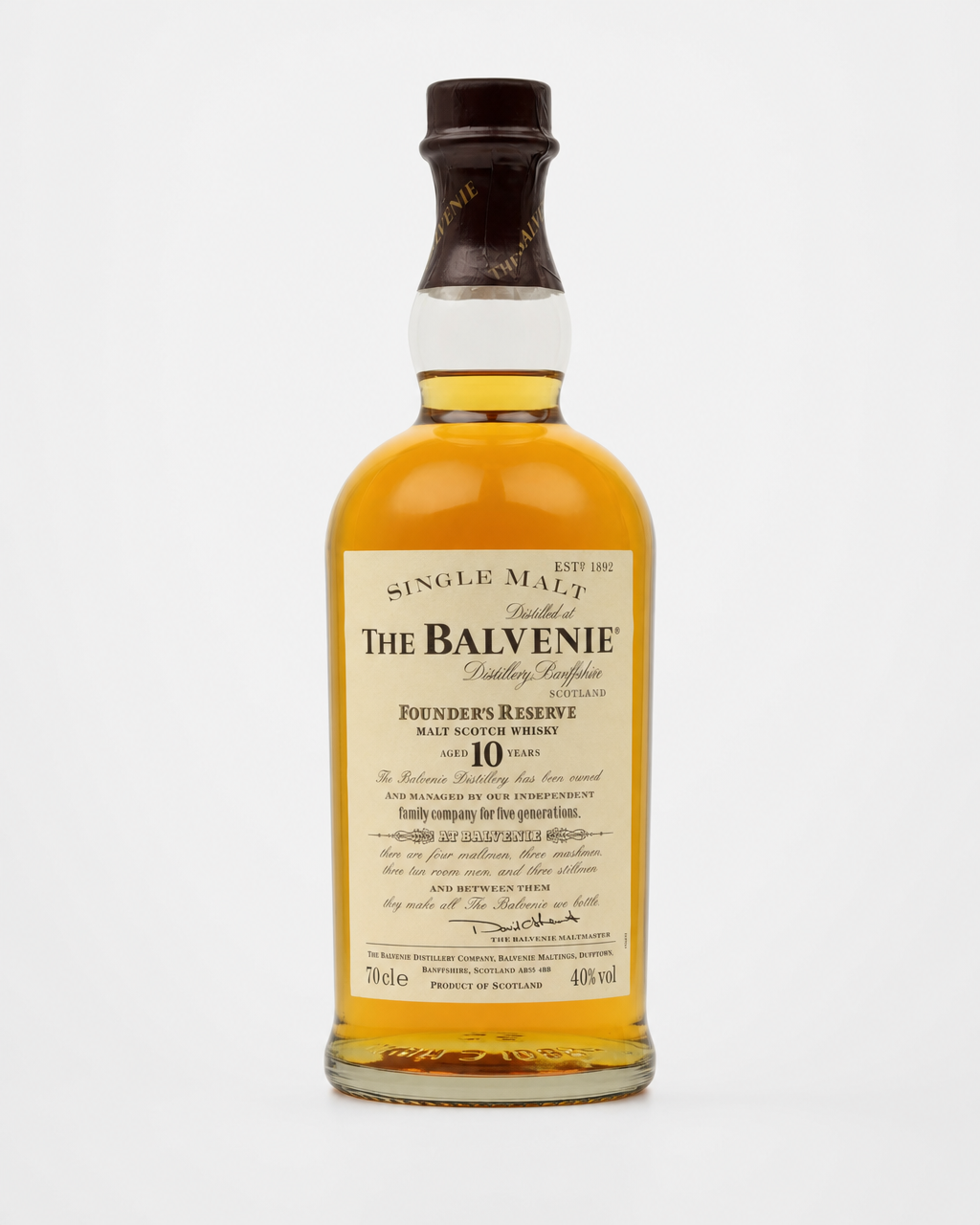
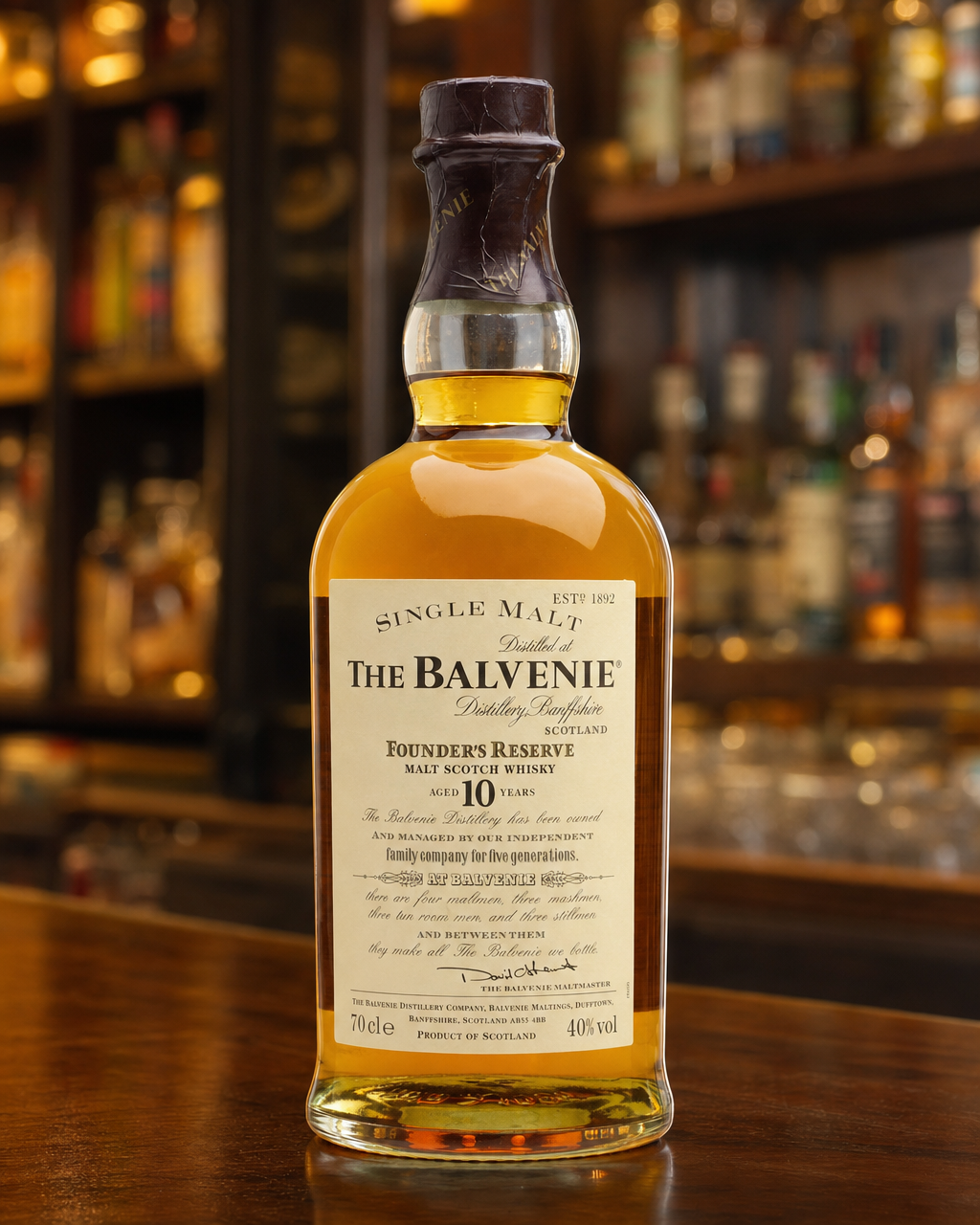
Balvenie 10 Years Old (Founder’s Reserve) Price, Value & Investment Data

(as of 2026-07-24)
(since 2015-04-01)
Liquidity score: based on historical data, there is a ~97.96% chance that you can sell this bottle on the secondary market at its actual market value.
Balvenie 10 Years Old (Founder’s Reserve): Price History
The Balvenie 10 Years Old is a well-known single malt scotch whisky from the Speyside region. Our research shows that it has been listed over 700 times on different whisky auction sites. With that, Balvenie 10 is considered a fairly frequently listed and very popular bottle of the secondary market. On this page, we collect all the hard-data and information that we currently have about it!
How much is a bottle of Balvenie 10 Years Old (Founder’s Reserve) worth?
As of July 2026, a bottle of Balvenie 10 Years Old (Founder’s Reserve) is worth about £55.83 on the UK secondary market — the average hammer price across recent auctions. Over the last 12 months the average price has fallen by 19.60%.
Prices for this bottle have been highly volatile over its auction history. It peaked at £114.38 in June 2017 and bottomed at £49.15 in June 2015. The chart above shows every individual auction sale alongside the monthly average.
Important qualitative insights about the Balvenie 10 Years Old (Founder’s Reserve) whisky
Is it still produced? No — it was a special/limited edition. (This is a new datapoint in our dataset and not yet fully reviewed, so occasionally it may be wrong.)
Taste profile: not yet in our database. (Coming soon…)
Is Balvenie 10 (Founder’s Reserve) a good investment?
When we evaluate Balvenie 10 Years Old (Founder’s Reserve) as an investment, we look mainly at two factors: its past performance (annualized return) and how easy it has historically been to sell (liquidity score).
Based on these factors, we consider it an average investment historically, because:
- it delivered a below-average annualized return: -0.78%
- it was easy to sell on the secondary market: in ~97.96% of cases a buyer paid the requested price
Is it worth investing in a bottle of Balvenie 10 Years Old (Founder’s Reserve) right now?
No one can tell where prices will be in a month, a year or a decade. What we do know is what it is worth today:
- its latest average price was £55.83
- that is -51.19% compared to its all-time high (£114.38)
- and +13.59% compared to its all-time low (£49.15)
Other editions of this whisky
Here are a few other editions of Balvenie 10 (Founder’s Reserve) that we have found on the secondary market:
We have not yet found any special editions of this whisky, but that does not necessarily mean they do not exist. We may update this section in the future, so please check back later. Please note that we do not list special editions with fewer than 100 transactions in the last 7 years on our website due to insufficient data.
Related whiskies
Frequently asked questions about Balvenie 10 Years Old (Founder’s Reserve)
Is Balvenie 10 Years Old (Founder’s Reserve) a good investment?
Historically we consider it an average investment: -0.78% annualized return since 2015-04-01, with a 97.96% liquidity score.
How easy is it to sell Balvenie 10 Years Old (Founder’s Reserve) on the secondary market?
Based on historical auction data there is a ~97.96% chance of selling Balvenie 10 (Founder’s Reserve) at its actual market value; 14 bottles changed hands at auction in the last 6 months.
For more info, visit the Balvenie brand’s website: The Balvenie.
Should you invest in this whisky right now?
Before you put money into this bottle, it is worth checking which whiskies are performing best on the secondary market right now. We keep these top lists updated for you: